On local food, agricultural potential, and the national opportunity we have yet to take seriously.
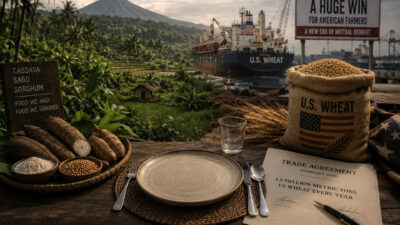
Indonesia has an extraordinary variety of food, but you would hardly know it from the way we organise our food system. Across the country, people have grown and eaten sorghum, corn, cassava, sweet potatoes, sago, beans and countless other local crops for generations. Some of these foods have sustained communities through difficult seasons, long before anyone thought to call them alternatives or introduce them at a food security conference.
Yet somewhere along the way, our relationship with food became rather selective. Colonial rule helped establish a hierarchy in which European food habits carried associations of refinement and status, while many local staples were regarded as provincial, poor or less desirable. Independence changed the flag, but apparently left the dinner table under old management. We kept the hierarchy, gave it a modern wardrobe and taught generations to associate certain foods with having made it, and others with having no choice. We inherited more than a change in taste. We inherited the embarrassment of our own harvest.
The consequences are not merely cultural. When a country undervalues its own crops, it also undervalues the farmers and knowledge behind them. Local food becomes something to preserve for tradition, promote during festivals or serve to tourists seeking authenticity. It is wonderful for cultural identity, provided it does not interfere with the more serious business of importing, processing and selling something else. Farmers, meanwhile, are expected to produce out of sheer devotion to the nation. Patriotism is lovely. It is less useful when the harvest needs a buyer.

Credit : pop eye
Boti Dalam, in Timor Tengah Selatan, East Nusa Tenggara, offers a different picture. The community has maintained a food system built around crops suited to its environment, including sorghum, corn, cassava, sweet potatoes, beans and bananas. Food diversity, traditional storage and inherited knowledge are not cultural decorations there. They are how people live and feed themselves.
There is an especially striking detail. Timor Tengah Selatan recorded a stunting prevalence of 45.2 percent in 2022, among the highest in the country. Yet the local auxiliary health centre in Boti Dalam reportedly recorded no stunting cases. The community continues to rely on the food it grows and inherited knowledge. This does not prove local crops alone prevent stunting. Nutrition also depends on maternal health, sanitation and healthcare. Still, the contrast is difficult to ignore. A community sustaining itself through a diverse local food system has something to teach a regency struggling with child nutrition. It might even have something to teach the people designing national food programmes.
Boti Dalam is not a model that can simply be copied across Indonesia. Its climate and traditions are specific to the community. But local food systems are not theoretical ideas waiting for a government programme to invent them. They already exist. Some communities have been practising food security for generations. The rest of us are still arranging seminars to discuss it.
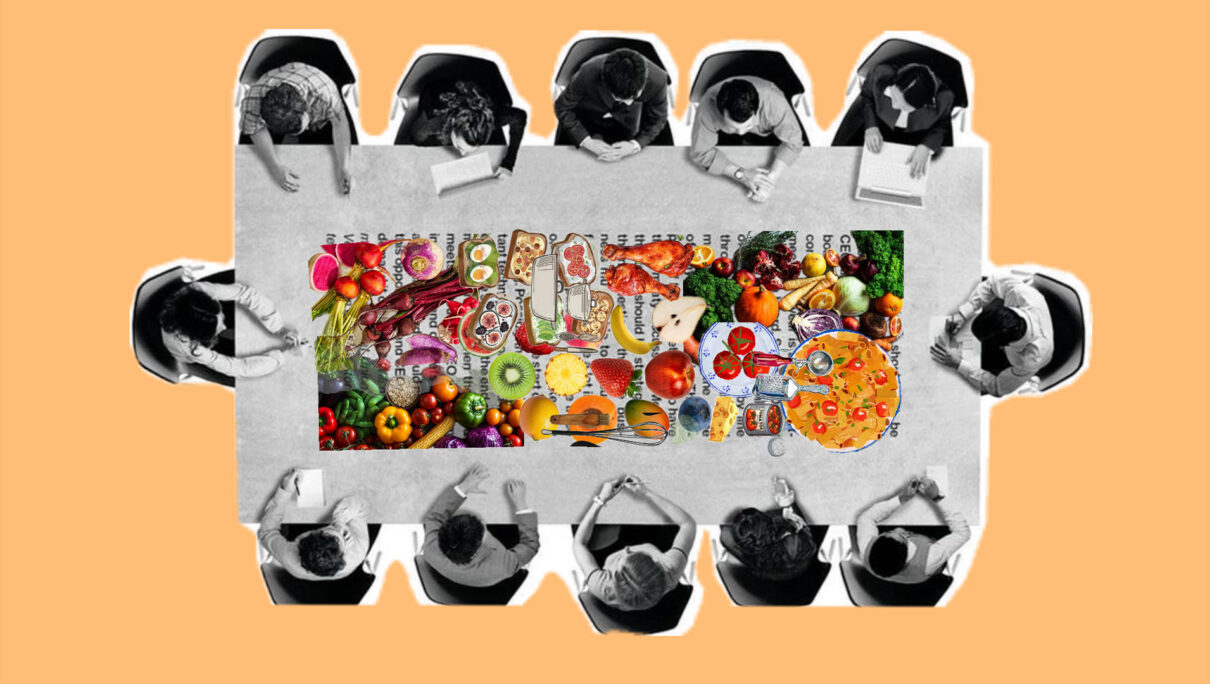
The question is why a country with such a wide range of agricultural conditions has not done more to develop that capacity. Indonesia does not need every region to grow the same crops. It needs policy that recognises regional strengths, invests in producers, improves storage and processing, creates reliable markets and makes local food viable. Farmers cannot keep producing simply because their crops are culturally important. They need buyers, infrastructure, fair prices and a reason to believe next year’s harvest will be worth the effort. A speech about loving local products is not a distribution network. Neither is a Canva presentation.
This is what food sovereignty should mean in practice. It does not mean abolishing imports or pretending every local crop can replace every imported product. It means having the capacity to feed ourselves before we have to import, borrow or, in the final indignity, beg. Local food should not have to audition for respect in its own country while imported products are welcomed as though their foreign passport were a nutritional qualification. The issue is not whether foreign products are evil. It is why a country rich in agricultural resources leaves its own potential underdeveloped, then acts surprised when it has to look elsewhere. We have managed to make self-reliance sound rather ambitious for a country that has been growing its own food all along.
Credit : Farid Chandra
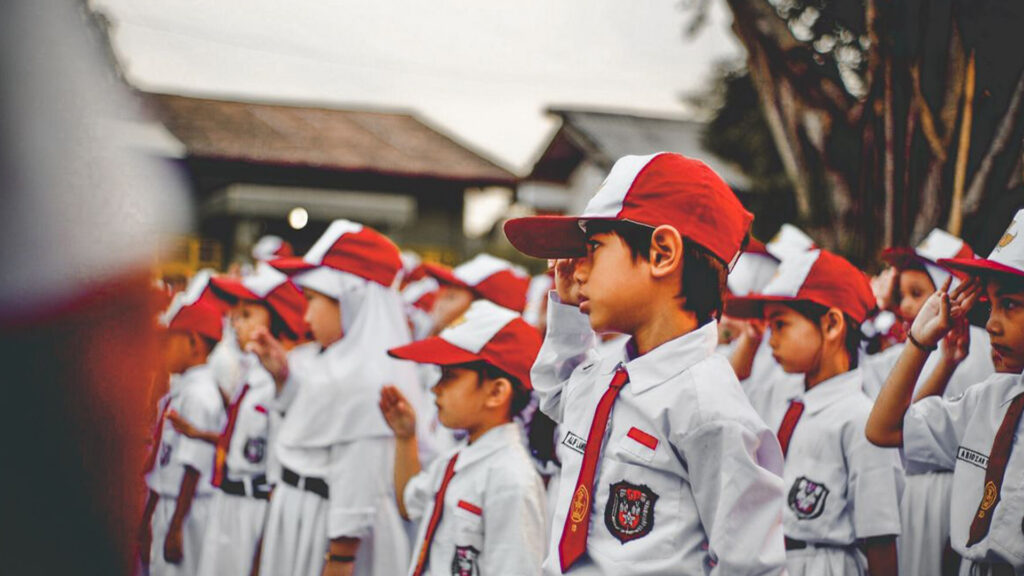
There is a useful example in how Japan approached feeding its children after the Second World War. Restarted in 1946 amid severe food shortages, school meals became part of a national system through the School Lunch Act of 1954. In 2005, Japan introduced its Basic Act on Shokuiku, formalising food education. School meals became more than an exercise in getting lunch onto a tray. Children learn about nutrition, food origins, local ingredients and food culture. They serve meals and clean up. Food, after all, does not simply materialise in a kitchen, fully cooked and conveniently portioned, as though nature had outsourced the entire operation.
Japan is not perfect, and its system is not a blueprint Indonesia needs to reproduce wholesale. The point is that feeding children can be part of a much larger investment in public health, education, agriculture and food culture. Food is treated as infrastructure, supported by schools, kitchens, nutrition professionals, farmers, public policy and, importantly, a government that understands its responsibility to make the whole thing work. Someone has to think beyond the lunch tray. In Japan, that responsibility appears to have made it into public policy.
Indonesia has the opportunity to build something equally meaningful around its own resources. Imagine school meals creating dependable markets for local farmers, introducing children to regional crops, supporting small producers and making nutrition education part of everyday school life. Such a programme could strengthen local agriculture, improve children’s nutrition and give regional food economies room to grow. It could turn the daily act of feeding millions of children into an investment in the country’s own food future. There is no shortage of things we could build. For once, we would not even have to import the ingredients.
But instead, Indonesia has MBG.
Indonesia does not lack food. It lacks the courage to treat its own food as enough.
Imagery curated from Google, Pinterest, and our studio. If your work is here without a name, let us know and we’ll fix it.