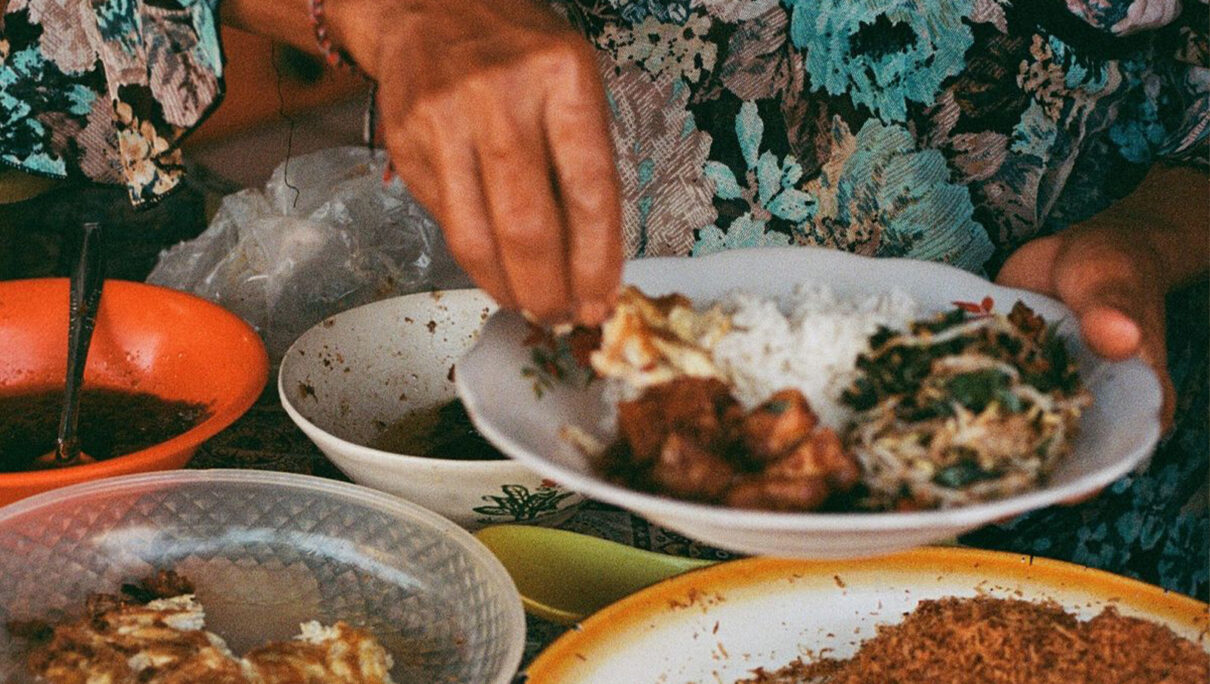
The truth about eating with your hands, hygiene, and why cutlery was never proof of civilisation.
There is a particular expression some people make when they see someone eating with their hands. It is not quite disgust. It is the look people reserve for someone who has committed a social crime with no visible victim.
They look at a plate of rice, curry, sambal, fish, maybe a few vegetables, and suddenly civilisation appears to be in danger. Never mind that, five minutes earlier, they touched their phone, a door handle, an elevator button, a café counter, cash, a menu, and possibly the hand of someone they barely know. The moment a clean hand touches food, apparently, we have gone backwards several thousand years.
This is interesting because the argument is always hygiene. “It is not hygienic.” Of course, hands should be washed before eating. Nobody is campaigning for germs. But a dirty hand is dirty, and a dirty fork is also dirty. One of them simply has better public relations. Somehow, a piece of metal became a symbol of progress.
The fork is useful. It helps with pasta. It is excellent with food that is hot, slippery, or attempting to escape. Nobody needs to declare war on cutlery. But somewhere along the way, people began treating it as evidence of moral development. If you use a fork, you are refined. If you use your fingers, you are primitive. If you use a spoon and fork together, you are modern. If you eat rice with your hands, somebody may quietly wonder whether you have heard of Europe.
Eating with your hands is not simply about moving food from plate to mouth. Your fingers are part of the meal. They tell you whether the rice is still too hot, whether the sambal has reached a level of danger that requires emotional preparation, whether there is a fish bone waiting to ruin your afternoon, and whether the bite has the right balance of rice, sauce, crunch, spice, and protein. A fork can stab food. Your hand can negotiate with it. There is a difference.

Anyone who has eaten a proper Indonesian meal with their hands knows that the best bite is not an accident. You do not just pick up rice and hope for the best. You gather. You press. You make a small arrangement of flavours: a little rice, some lauk, perhaps sambal if you are feeling brave, something fresh to stop your mouth from writing a resignation letter. Then you eat. It is intimate. It is sensory. It makes food feel less like fuel and more like something you are participating in.
This does not mean eating with your hands is medically superior or that fingers have mystical powers unavailable to cutlery. The internet has already produced enough nutritional mythology to keep several wellness influencers employed. But touch, smell, sight, and taste are all part of how people experience a meal. Handling food can make you more aware of its temperature, texture, and portion. That attention is not primitive. It is the opposite of mindlessly shovelling food into your mouth while answering emails and pretending a protein bar counts as lunch.
The truth is, the fork was never really about hygiene. It was about manners. And manners, unfortunately, have a long history of becoming a ranking system. The people with power usually get to decide which habits look sophisticated. Their food becomes cuisine. Their accent becomes polished. Their clothes become formal. Their way of sitting, greeting, speaking, and eating becomes the standard everyone else is expected to grow into.
The people who set the standard get to call their own habits etiquette. Everyone else is expected to upgrade. That is how eating with your hands, something millions of people do cleanly, skilfully, and without incident became a habit some people feel they need to hide in public. Colonial thinking did not always arrive with soldiers, flags, and official speeches. Sometimes it arrived at the dinner table. Sometimes it came disguised as etiquette. Sometimes it quietly told people that being respectable meant putting distance between yourself and the food that came from your own culture.
Use a fork at a formal dinner if you want. Use chopsticks. Use a spoon. Use your hands. The point is not that one method must defeat the others in some absurd international cutlery competition. The point is that food does not become more civilised because you need equipment to touch it. A spoon will not make soup superior. A knife will not make steak enlightened. And a fork cannot turn a superiority complex into good manners.
Use a fork if you want. It is useful. Just do not mistake it for evidence of evolution.
Imagery curated from Google, Pinterest, and our studio. If your work is here without a name, let us know and we’ll fix it.